
Local Rules
Bagged, Lidded, and Either a Tote or a Sticker
Loose garbage is not collected. That one rule accounts for most of what gets left at the curb in this city.
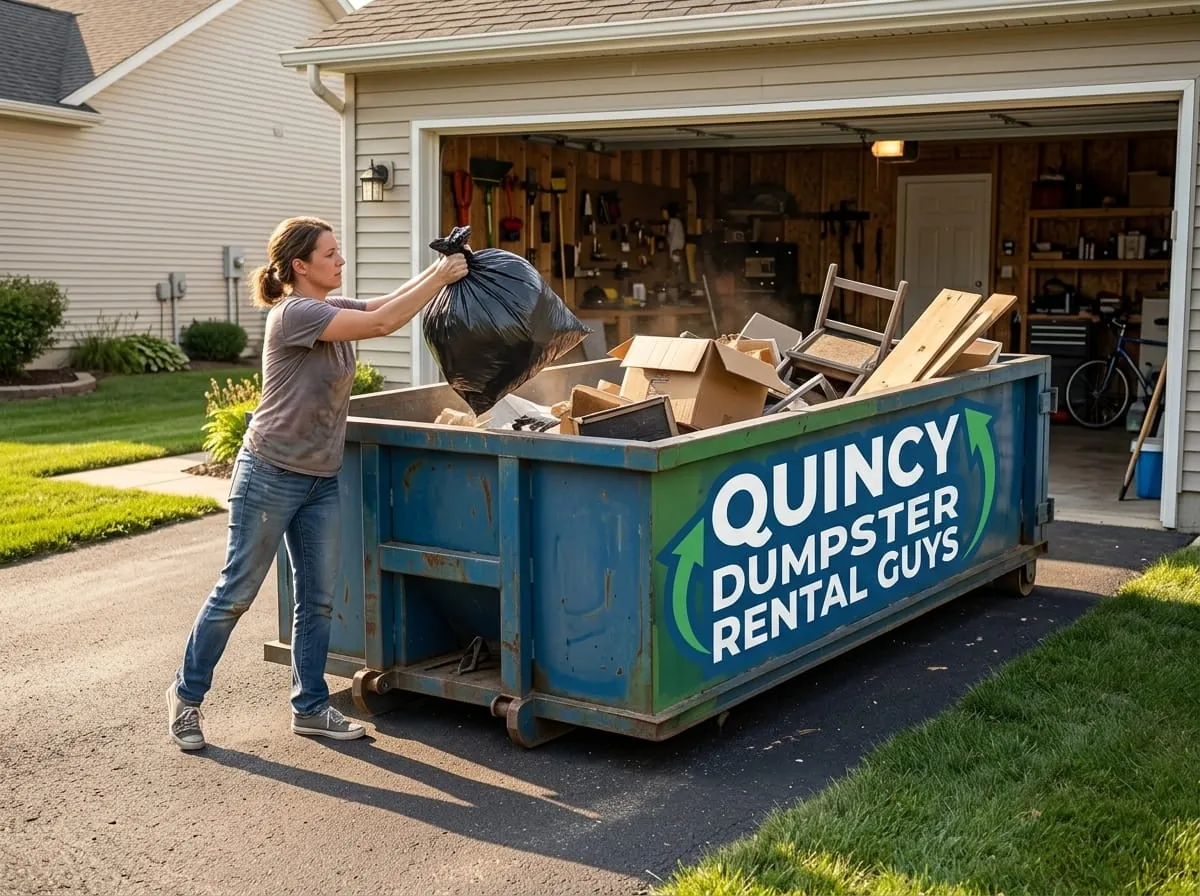
Everything must be in a bag
If something gets left behind in Quincy, this is usually why.
It sounds obvious until you are clearing a garage and tipping an armful of loose oddments straight into the tote. That tote is now non-compliant, and the crew is not going to sort it out for you.
There is a specific extension of the same rule that catches pet owners: animal waste must be placed in a plastic bag before going into a garbage bag inside the tote. Bag within a bag.
The container matters as much as the bag
Bagging is only half of it. The bags then have to go somewhere specific:
The municipal code goes further and describes what a proper receptacle actually is:
- A lid, and a design that prevents animals or birds from getting in.
- Metal, plastic or another city-approved material.
- Watertight.
- Suitable handles for lifting.
Every one of those has a reason behind it. Lids and animal-proofing keep the curb from being torn open overnight. Watertight keeps the contents from leaching onto the street in rain. Handles are there because somebody has to lift it.
⚠️ The 95-gallon ceiling
The specific number in the code, and worth knowing before you buy a container.
A proper receptacle must have a capacity of not more than 95 gallons.
That is a generous size — larger than most household bins — but it is a ceiling, and it exists because a container beyond it cannot be handled safely or emptied by the equipment on the route. If you are buying your own container rather than joining the tote program, check the capacity before you check the price.
It also quietly explains a lot: anything that would need a bigger container than 95 gallons is, by definition, past what the residential service is designed to take. That is the point at which people call us, and it is a reasonable place to draw the line.
Totes or stickers — pick one
Quincy runs two ways of paying for residential collection, and you are on one or the other.
| Tote Program | Stickers | |
|---|---|---|
| Stickers needed? | No — bags in a City tote need none | Yes, on every bag |
| Small bag, up to 16 gallons | Covered | Stickers equal to $1.50 |
| Still must be bagged? | Yes | Yes |
| Still needs a lidded container? | The tote is the container | Yes — appropriately sized, tight lid |
| Best for | Steady weekly volume | Low or irregular volume |
The arithmetic is worth doing once. If you are regularly buying more than a couple of stickers a week, the tote program is likely the cheaper arrangement — and it removes the risk of a bag going out unstickered and simply staying there.
Central Services handles sign-up. Their number is (217) 228-4500 and City Hall is at 730 Maine Street.
Recycling is drop-off, not curbside
An important structural difference from a lot of cities, and one that surprises people moving here.
The City provides recycling drop-off sites. There is no blue bin going out with the garbage — you take recyclables to a site.
Two practical consequences:
- Cardboard from a move or a renovation accumulates fast, and it is on you to run it somewhere. Flatten it as you go or it takes over the garage.
- Recycling well genuinely reduces what you need a container for. On a clear-out, pulling cardboard, glass and cans out first can make a real difference to the size you book.
Check the current drop-off locations with Central Services — they are the department that keeps that list, and sites do change.
What the service will not take
Residential collection is for household garbage. Not on the list:
- Construction and demolition debris — drywall, plaster, lath, timber, cabinetry, flooring, roofing, windows
- Yard waste, which is an entirely separate stream with its own tight limits
- Hazardous material of any kind — paint, solvents, fuel, chemicals
- Anything from a building of five units or more, or from a commercial property, which is outside the service entirely
- Loose material, however ordinary, because of the bagging rule
The rule with legal teeth
Most of the above is enforced by material simply not being collected. One rule is different.
That is the municipal code, and it closes off the informal options — burning it, burying it on your own land, adding it to somebody else's bin, or leaving it somewhere it is not supposed to be.
The City also runs special depositories from time to time, and the code is equally clear about those: they are for city residents, for household refuse, not for biodegradable household garbage, and not for use by commercial establishments. Proof of name and address can be requested.
None of this is aimed at people doing the right thing. But it does mean that when the curbside route runs out, the alternative has to be a proper one.
A pre-collection checklist
- Everything in a bag — loose garbage is never collected
- Animal waste bagged separately inside the garbage bag
- Bags inside a container with a tight closing lid
- Container no more than 95 gallons, animal-proof, watertight, with handles
- On stickers? $1.50 per small bag up to 16 gallons
- On the tote program? No stickers needed — but still bag it
- Recycling goes to a drop-off site, not the curb
- Yard waste is separate and has its own limits
- Construction debris is not household garbage
- Five units or more? You are outside the service — arrange a private hauler
Rules, fees and programs change. Everything above reflects the City of Quincy's published arrangements at the time of writing and applies inside the city limits only. Confirm current requirements with Central Services on (217) 228-4500.
Need a container in Quincy?
Call and describe the job. Three minutes on the phone gets you a size recommendation, a flat rate and a delivery window — and we will tell you if a smaller, cheaper container is the right answer.
Call (217) 919-5126