
Cleanouts
An Estate Cleanout Checklist That Respects the Family
Clearing a family home is not a logistics problem with feelings attached. It is an emotional process with logistics attached, and the order matters.
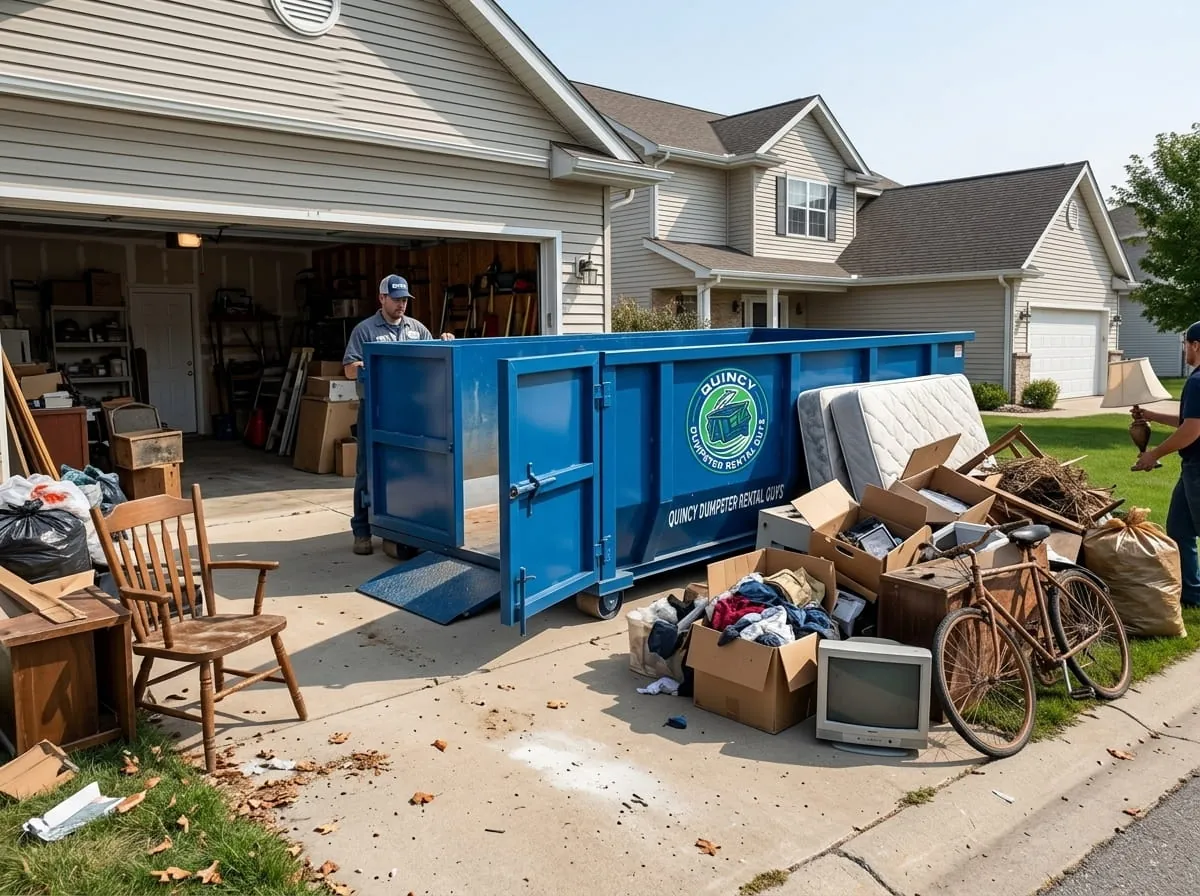
Before anything leaves the house
The most important rule of an estate cleanout is that nothing leaves the property until the legal side is settled. If the estate is in probate, or if there is any disagreement among heirs, talk to the attorney before the container arrives rather than after.
Before you start:
- Confirm who has legal authority to dispose of the contents
- Locate the will, deed, titles, insurance policies and financial records
- Photograph every room before anything moves
- Agree among the family who wants what, in writing if there is any tension
- Check whether anything is specifically bequeathed
- Have anything potentially valuable appraised rather than guessed at
A local note worth adding: a great many Quincy houses have been in the same family since they were built, and plenty of properties out toward Camp Point, Golden and Clayton have been held for generations. Original deeds, abstracts of title, farm records and decades of paperwork are frequently still in the house. Do not clear a desk or a filing cabinet without someone reading it first.
The four-pile method
- Keep. Family members are taking it. Label it with a name.
- Sell or donate. Set a deadline — if it has not gone by then, it moves to disposal.
- Dispose. Into the container, or to the appropriate local route.
- Special handling. Documents to shred, medications, firearms and ammunition, chemicals, electronics, batteries, tires and appliances.
Nothing goes into a fifth "decide later" pile, because the decide-later pile grows until it swallows the project.
Things people throw away and regret
- Paperwork not checked. Savings bonds, share certificates, insurance policies, deeds and cash turn up inside books, tins and drawers with genuine regularity.
- Photographs, slides and negatives. Once gone, gone.
- ⚠️ Architectural salvage. Worth flagging specifically in this town. Doors, mantels, trim, hardware, stair parts, stained glass and light fixtures from an older Quincy house have a real market and a real purpose — somebody else's restoration. A boxed set of original brass hardware looks like junk in a basement and is not.
- Cast iron radiators. Salvage value and scrap value both.
- Military records. Discharge papers, medals and service records matter to somebody, always.
- Farm and land paperwork on rural property out in the county.
- Costume jewellery. Frequently sorted into disposal by people looking for real gold. Some of it has genuine collector value.
- Tools. Hand tools and workshop equipment are collected seriously, and a well-kept mid-century workbench often holds decades of quality.
- Anything in the freezer or a coffee tin. Older people of a certain generation did not always trust banks.
The five-minute rule. Before any container of paper, any book, any tin and any item of furniture goes in the dumpster, someone opens it and looks. It slows the job down and it is worth it every single time.
What cannot go in a container
- Paint, solvents, fuel and garden chemicals — hazardous waste, which is barred from non-hazardous landfills by state law
- Fridges, freezers, washers, dryers and ranges — white goods, also barred; they need their own route
- Tires — barred as well
- Anything containing free liquids — drain the water heater first
- Electronics — televisions, monitors and computers
- Batteries of every kind, including those inside power tools and mobility scooters
- Propane cylinders and aerosols, including "empty" ones
- Medications. Pharmacy take-back
- Firearms and ammunition. Contact the police for guidance — do not transport them to a container
- ⚠️ Asbestos. Never a container, and a genuine risk in this town's older housing — see below
- Confidential documents. Shred rather than dumpster
Mattresses and furniture are fine in a container, and on a full house clearance that is usually the realistic route for them.
⚠️ Start with the basement
The single most important piece of local advice on this page.
Nearly every house across Quincy has a full basement, and on a home held by one family for decades it holds more than the rest of the house combined. It is also where every prohibited item lives.
A typical basement here holds paint from four decades of redecorating, fuel for the mower, motor oil, solvents and adhesives on a workbench, batteries in tools nobody has used since the nineties, fluorescent tubes, the chest freezer, and very often a second fridge.
Do it first, and in this order:
- Chemicals, fuel and tires out before anything else moves. Once boxes are stacked in front of a shelf, the shelf gets forgotten and the fuel can ends up in the container.
- Set the appliances aside for their own route. The freezer and the second fridge cannot go in a container at all.
- ⚠️ Look at the old boiler and furnace insulation before anyone touches it. In a pre-1980 Quincy house it may contain asbestos, and a basement clear-out is exactly when it gets torn out without a second thought. If in any doubt, stop and get it tested.
- Check for damp damage. Older basements here take water, and anything that sat wet is heavier and may need different handling.
- Pull the cast iron. Radiators, soil stacks and old boilers have genuine scrap value and take serious weight out of the container.
- Then start on the volume.
Getting it up the stairs is the real work. Place the container as close to the door you will actually use as we can get it — fifteen extra feet of carry, repeated three hundred times, is the whole job.
Where the local routes fit
- City garbage collection — only if the property is inside the city limits and in a building of four units or fewer, bagged and lidded.
- Recycling drop-off sites — free, and pulling cardboard out of a clear-out genuinely reduces the container size you need.
- City-wide clean-up events — Central Services organises these on (217) 228-4500. Worth asking about before you book anything.
- Yard waste — within its tight limits.
- Architectural salvage and scrap metal — real value in this town, and separate routes.
- The container for everything else — which on an estate clearance is usually most of it.
Sizing the container
- Apartment or small unit: 15 yard
- Two to three bedroom house, basement not included: 20 yard
- Three bedroom with a full basement: 30 yard, or a 20 with a swap
- Long-held family home, everything going: 30 yard, and plan for a second
- Rural property with a barn or machine shed: 30 yard with a swap on standby
- Older street or a narrow lot: 15 yard with swaps — access decides it, not volume
- Anything involving plaster, masonry or limestone: a separate small container
Household contents are bulky and light, so these jobs generally size up — and the basement is what pushes them up a size. We schedule estate work with longer rental windows as standard, because they do not run to a tidy timetable.
Coming in from out of town
A common situation, because families spread out while the house stays.
If you are travelling in to clear a parent's house in a single week, tell us the dates when you book. We will have the container on the driveway the day you arrive rather than three days into a week you cannot extend, and we will schedule the swap before you need it rather than after.
Four practical notes for a compressed visit:
- Book before you travel, not once you arrive.
- Check which city or village the house is in. It decides whether there is any municipal collection to lean on at all.
- Allow for winter. A January visit can lose days to snow, and ice changes what we can safely do on a graded drive.
- If the house is old, plan for the salvage step. It takes an afternoon and it is the part people most regret skipping.
Consider professional help when the property has been hoarded, when there is pest activity, when biohazard is involved, or when nobody in the family is local. There is no failure in that.
Need a container in Quincy?
Call and describe the job. Three minutes on the phone gets you a size recommendation, a flat rate and a delivery window — and we will tell you if a smaller, cheaper container is the right answer.
Call (217) 919-5126